



Inflammation of the prostate gland is one of the most common urological diseases, which, according to statistics, occurs in 60% of men after 50 years.There are many reasons why the disease develops;they can be hidden in lifestyle, concomitant bacterial infection of the genitourinary system, or have a genetic predisposition.Prostatitis is a dangerous and serious disease, but most men, when faced with ego symptoms, prefer to remain silent and not seek help from a doctor, considering that their problem is purely individual and shameful.If prostatitis is not treated in the first stage of the disease, it has the ability to develop, become chronic, and interfere with the functions of the reproductive and urinary systems.
Prostatitis should be treated when the first signs of the disease appear.In addition, the treatment itself must be carried out comprehensively, including both drug treatment and physiotherapeutic procedures, proper diet and lifestyle.Achieving remission with prostatitis is possible only with the right approach to treatment, which will be prescribed by the doctor after examining the patient and the results of research.Especially popular among patients suffering from prostatitis is taking drugs that will not only relieve inflammation, but also eliminate the symptoms of the disease and help put it into a long-term remission stage.
Modern pharmacology offers a large list of drugs for the treatment of prostatitis, each of which has a specific mechanism of action in combating the symptoms of the disease.Before considering an effective drug for the treatment of prostatitis, it is important to know how the disease manifests itself and what symptoms you should pay attention to in order to recognize it at an early stage.
How to recognize the symptoms of prostatitis?
With the development of acute or chronic prostatitis, a man is faced with several unpleasant symptoms that worsen his well-being and quality of life.During the acute period, there is pain in the perineal area, which increases with urination.Sometimes the pain can radiate to the lower back, sacrum, or lower abdomen.The intensity of the pain depends on the area of damage to the prostate cells;it can press, stab, pull, and sometimes burn or burst.In addition to pain, there are other symptoms including:
- Discomfort in the perineal area.
- Discomfort during defecation.
- Frequent and false urges to urinate.
- Difficulty urinating.
- The presence of mucus, white threads or blood in the urine.
- Erection is uncontrolled but flaccid.
- Ejaculate quickly.
- Increased body temperature.
- Decreases libido and sexual desire.
- Increased fatigue.
- Partial or complete loss of potency.
The appearance of such symptoms cannot be noticed by a man, but sometimes even obvious clinical manifestations do not force men to consult a doctor.Many people prefer, trusting advertising or the advice of pharmacists, to use this or that drug for prostatitis, but in order for treatment therapy to bring good results, you need to consult a doctor who, based on the results of the examination and analysis of the results, will be able to create an individual treatment regimen.
What drugs treat prostatitis?
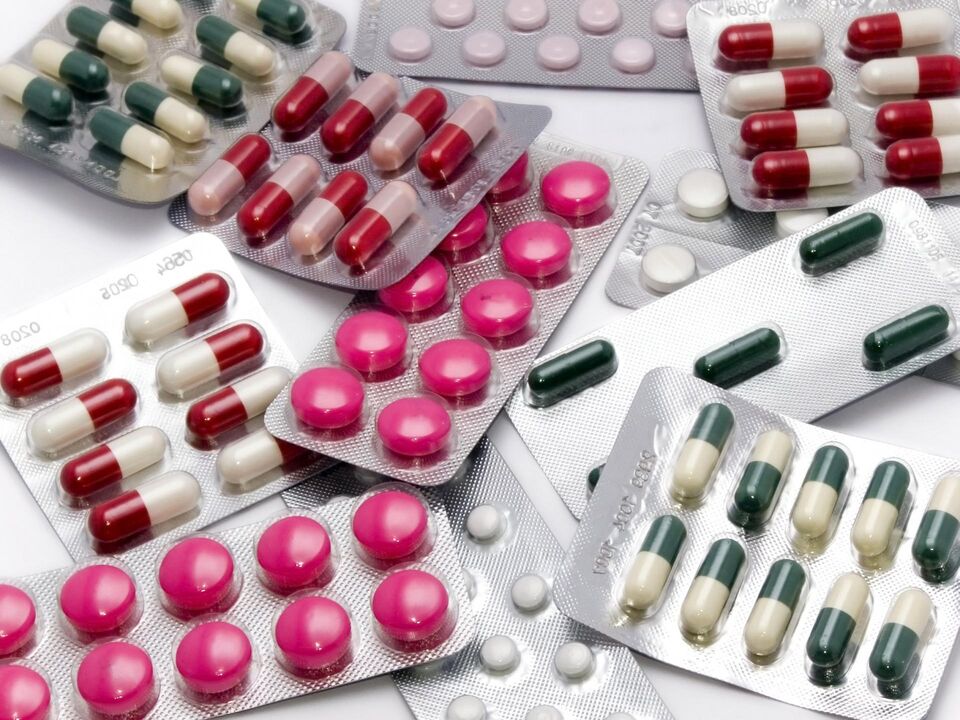
Treatment of prostatitis should always be comprehensive, but an important place in therapeutic therapy is given to pharmaceutical drugs.To treat prostatitis, several groups of drugs are used, each of which has its own mechanism of action: antibiotics, painkillers, α-blockers, muscle relaxants, hormones, antivirals, anti-inflammatories and others.What medicines the doctor will prescribe depends on the cause of prostatitis, the stage of its development, and the characteristics of the male body.In cases where prostatitis has a bacterial etiology, the doctor will definitely prescribe antibiotics;if it's a virus, antiviral drugs.The duration of treatment for prostatitis can take from several weeks to several months.
Therapeutic treatment of prostatitis aims to eliminate the inflammatory process, also eliminate the congestive process in the prostate tissue, eliminate the main cause, and relieve the symptoms.Some patients believe that it is enough for them to take one drug, but as practice shows, prostatitis must be treated using several drugs with different mechanisms of action.In order for the treatment to be correct and effective, you need to undergo a comprehensive examination, which will help the doctor decide on the choice of medicine:
- Non-steroidal anti-inflammatory drugs, which help relieve inflammation, reduce pain, relieve swelling in the prostate tissue, thereby reducing pain.
- Painkillers.Prescribed for severe pain in the genital area.
- Antibiotics are prescribed for prostatitis of bacterial origin.Basically, doctors prefer broad-spectrum drugs that can block the activity of several types of bacteria.
- Alpha adrenergic blockers, which allow you to relieve spasms in the prostate and bladder neck, reduce pressure in the urethra, increase urine outflow, and stimulate blood flow to the pelvic organs.
- Antispasmodic.In the acute period of the disease, smooth muscle spasms are relieved, thereby providing an analgesic, anti-edematous, and anti-inflammatory effect.
- Relax the muscles.They have almost the same effect as alpha blockers.They allow you to relax muscle tone, relieve swelling and pressure on the organs of the genitourinary system, thereby reducing pain.
- Antiandrogen drugs.Relieves inflammation in bacterial prostatitis.They are prescribed quite rarely, because they have many contraindications.
- Bioregulatory peptides.A new drug for the treatment of prostatitis.It does not relieve inflammation, has no antibacterial effect, but allows you to stimulate the regeneration of the gland and normalize metabolic processes in the tissue of the prostate gland.
- Herbal preparations for prostatitis, which contain natural ingredients.These drugs are the most popular among men suffering from prostatitis.
- Antiviral drugs are prescribed in cases where prostatitis is viral in nature.Such drugs complement complex therapy, act on viruses, and stimulate the immune system.
The doctor must prescribe any medicine, determine the dosage, and the duration of treatment individually for each patient.
Antibiotics for prostatitis
Antibacterial drugs are considered an important component in the treatment of acute prostatitis.They are used in cases where the disease is of bacterial origin.Taking antibiotics allows you to neutralize the effect of pathogenic pathogens and suppress their aggressiveness.Most often, doctors prescribe broad-spectrum antibiotics from the group of penicillins, cephalosporins, aminoglycosides, tetracyclines or macrolides.The course of treatment directly depends on the stage of the disease and can take from 7 days to 2 weeks.Many doctors believe that it is impossible to cure prostatitis without antibiotics, so they often prescribe:
- Fluoroquinolones.
- Aminopenicillin.
- Cephalosporins.
- Macrolides.
- Tetracycline.
The above group of antibiotics are available in different forms and are intended for oral and intramuscular use.The dosage, as well as the duration of use, remains with the attending physician.Prices for antibiotics vary, so when prescribing an expensive drug, a man may ask to be given a cheaper analogue with the same mechanism of action.When taking antibiotics for a long time, you need to take care of the intestinal microflora, so you need to take probiotics in combination.
The most popular tablets for prostatitis
There are many drugs that help cure prostatitis, but in any case, their use should be agreed with a doctor.Prostatitis needs to be treated comprehensively, so it is impossible to cure with only one medicine.The use of one drug will only help to suppress the symptoms of the disease, which will return with renewed vigor over time.Every man should understand that prostatitis is a rather serious disease that has the ability to progress.Therefore, to avoid problems in the future, to exclude surgical treatment, prostatitis should be treated as soon as possible.Some doctors in the field of urology claim that to exclude prostatitis, its prevention should be done at a young age.
Features of prostatitis treatment
Treatment of prostatitis in men should be carried out thoroughly;patients not only need to take pills, but also follow a strict diet, monitor their lifestyle, and quit alcohol and smoking.To get an effect, you can use traditional medicines, but they can only act as an additional therapy to the main treatment.Self-massage, physiotherapy, electrical stimulation, hormone therapy, exercise therapy and other techniques that will speed up recovery and reduce the risk of the disease degenerating into a chronic form or prostate adenoma will be beneficial in the treatment of this disease.

When using any medication, you must strictly adhere to the prescribed dosage and do not stop treatment or adjust the dosage.It is important to understand that only an integrated approach to treatment will help relieve a man of prostatitis, reduce the risk of complications, and preserve sexual function.
Reviews
First review, male, 46 years old
I suspected the first symptoms of prostatitis when I was 44 years old, but they were barely noticeable, sometimes I was bothered by cuts, mild pain in the groin, I often ran to the toilet, but somehow it passed quickly, and sometimes there were problems with erection.It is good that my wife insisted on visiting the doctor.He examined me, ordered tests, and then said that it was inflammation of the prostate - that is, prostatitis.I was prescribed antibiotics for a 10-day course, as well as herbal medicine and suppositories.I can say that the treatment paid off and I was able to get rid of the unpleasant symptoms of the disease in almost a week!
Second review, male, 62 years old
I worked as a driver all my life, maybe that's why the problem started in my old age.At first, I often ran to the toilet, but most of the urges were false.Then I began to feel a slight stabbing pain in the groin area, which radiated to the lower back.I did not rush to see a doctor, I went to the pharmacy, where they gave me rectal suppositories, as well as homeopathic drops.I was treated for 10 days, I am still taking drops to this day.I can say that the treatment is good, after 10 days I noticed that not only the symptoms disappeared, but also the erection increased.
Third review, female, 40 years old
My husband is only 38 years old, but he has all the symptoms of prostatitis.At night he wakes up several times to go to the toilet, sometimes complains that his lower abdomen is tight, his erection has decreased, and his body temperature rises periodically.He firmly refused to go to the doctor and said that everything would pass.I turned to a friend at the pharmacy, he advised me to take antibiotics, as well as suppositories and capsules.I earnestly persuaded him to undergo treatment.In general, after 2 weeks of treatment, my husband no longer complains about worsening health, he says that he feels great!
Fourth review, male, 52 years old
I have suffered from prostatitis for many years now, but I try to follow all the doctor's recommendations, adhere to a healthy diet and lifestyle, and during periods of exacerbation I immediately take antibiotics and suppositories.I can say that despite my prostatitis, I feel very well, I do not complain about problems with potency and general well-being.I think the main thing is not to let the disease develop and not to self-medicate and everything will be fine!
Fifth study, female, 36 years old
My father suffers from prostatitis, but he does not use expensive drugs, preferring traditional medicine.At first it worked, the symptoms subsided, but after a while they reappeared, and last summer he was attacked by an acute attack of pain in the perineal area and was unable to move.We went to the clinic, where we were told that the disease had progressed and we had to undergo surgery!The surgery went well, but the doctor still told us that if he had been treated properly, then we wouldn't need to do the surgery.like this!
Sixth review, male, 40 years old
I would never have thought that at the age of 40 I would be faced with a diagnosis like "acute bacterial prostatitis."The doctor gave me this diagnosis after I started feeling severe pain in the lower abdomen, and there was also a constant urge to go to the toilet.I was prescribed a course of antibiotics, as well as a strict diet, herbal capsules and suppositories.I have been treated for more than 2 weeks, the results are good, but the doctor said to strictly follow the diet, no alcohol, no fatty food, because the disease can get worse and come back.Now it's just a healthy lifestyle and healthy eating, because I'm only 40 years old!